
Digitalization is advancing rapidly across industries, and the poultry sector is no exception. As the industry continues to evolve, collecting, managing, and evaluating data has become increasingly important for improving performance and fostering a more objective, fact-based dialogue between supplier and client. When used effectively, data helps poultry professionals better understand production processes, identify opportunities for improvement, and base decisions on measurable results rather than assumptions. In addition, flock data provides valuable insight into management and stockmanship, enabling performance monitoring throughout the production cycle.
The growing role of data in poultry production
22 Jul 2026Collecting data is just the first step
Agriculture has long been an early adopter of new technologies. Feed and water management, climate computers or GPS technology have supported producers for many years. Today, the opportunities to collect data are greater than ever. A wide range of sensors can continuously monitor parameters such as feed intake, water consumption, temperature, CO2 levels, humidity, and many other measurements.
Modern communication networks make it possible to collect and centralize these data in increasingly large databases. However, the value does not lie in the volume of data collected. The real challenge is transforming this raw information into meaningful insights.
Data must be evaluated and translated into practical parameters and indexes that help explain what is happening inside the poultry house. Only then can the information support better management decisions and improved flock performance.
Using data to support flock management decisions
Traditionally, flock performance is evaluated after the production cycle has ended by combining slaughter results with feed and water consumption data. While this retrospective analysis offers valuable information for future cycles, it offers little opportunity to influence the performance of the current flock.
Advances in digital technology now make it possible to move beyond this retrospective evaluation. Real-time data collection systems can generate performance indicators during the production cycle, allowing trends and emerging issues to be identified earlier and enabling action when needed. In addition, tools such as flock charts, climate computers, and daily observations continue to play an important role. Their value increases further when observations are digitized immediately, making it easier to detect patterns and respond more quickly.
For feed suppliers, this creates opportunities to provide advice and make adjustments during the cycle to support performance, flock health and economic results. Real-time data can also help predict growth rates and estimate the time required to reach target weights, supporting more accurate slaughter planning.
Beyond day-to-day management, the growing volume of data stored in centralized databases enables more in-depth analyses across regions, production types, and breeds, while also supporting benchmarking between feed suppliers.
Integrating data into a single management platform
As the amount of data and the number of monitoring systems continue to increase, integrating information from multiple sources has become an increasing challenge. Many equipment suppliers provide their own devices and software platforms, making it difficult to bring all information together in a single environment.
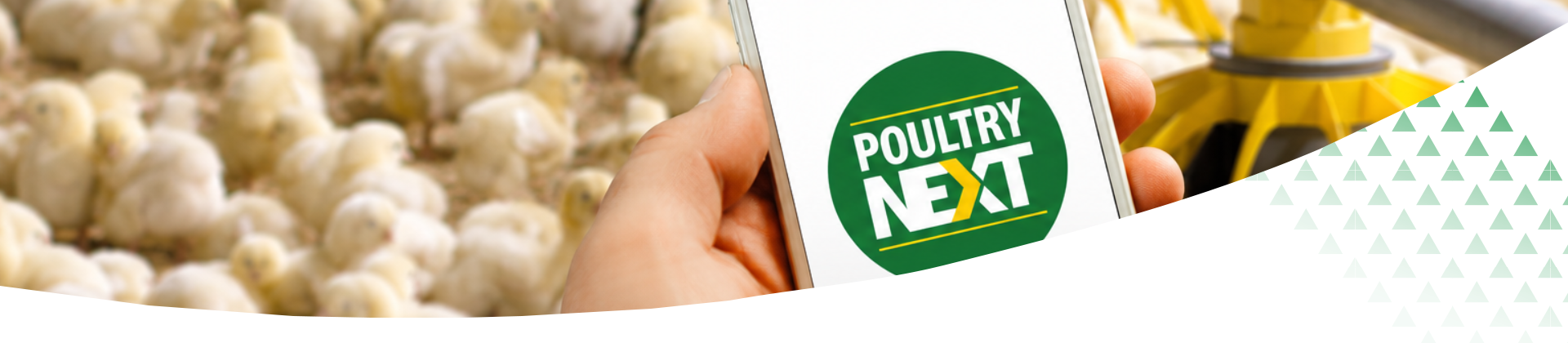
To address this challenge, Royal Agrifirm Group developed PoultryNEXT, an open and flexible platform designed to centralize and organize poultry production data. Through dedicated interfaces, the platform can connect a wide range of sensors and equipment, bringing information from multiple sources in one place. Data can be integrated both in real time and through offline applications, providing a comprehensive view of flock performance.
By consolidating data in a single platform, PoultryNEXT enables efficient management of large volumes of information and provides users with tailored dashboards. The purpose of collecting data is not simply to generate reports, but to create actionable intelligence. This enables the development of customized parameters and indexes that support improved flock management decisions.
The modular design of PoultryNEXT supports a wide range of datasets, from basic production information such as feed intake, water intake, and slaughter results to more complex data generated by multiple sensors. This flexibility allows dashboards, parameters, and indexes to be tailored to specific business objectives and regional requirements.
At the same time, digital tools should be viewed as a complement to good stockmanship, not a replacement. PoultryNEXT can help visualize and validate flock performance, but effective management and observation in the poultry house remain essential for achieving optimal results.
Conclusion
As poultry production continues to embrace digitalization, the ability to collect, integrate, and evaluate data becomes increasingly important. When transformed into meaningful insights, data can support more objective decision-making, earlier intervention, and a better understanding of flock performance.
By bringing data from multiple sources together in a single platform, PoultryNEXT provides a foundation for more informed, fact-based decision-making, helping poultry professionals translate data into meaningful action.